
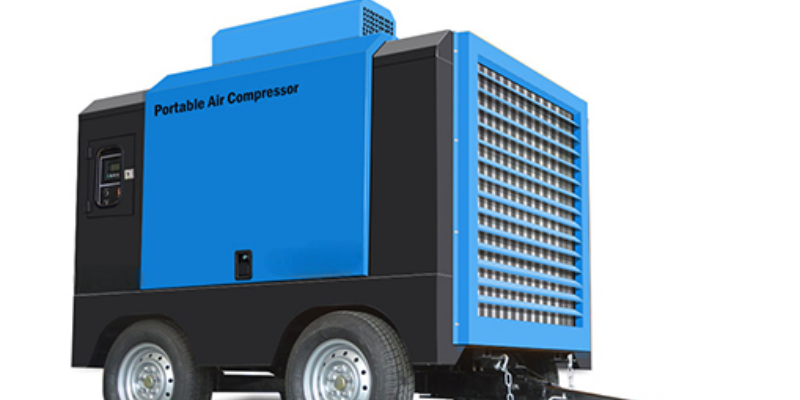
The Future of Air Compressors: Innovations to Watch
The air compressor industry is undergoing a significant transformation. Driven by demands for greater energy efficiency, connectivity, and sustainability, next-generation air compressors are becoming smarter, cleaner, and more adaptable than ever before.
This article explores the key innovations shaping the future of air compressors, from intelligent controls and IoT integration to advanced materials and electrification.
1. Smart Compressors: IoT, AI, and Predictive Maintenance
One of the most significant shifts in air compressors is the integration of the Internet of Things (IoT) and artificial intelligence (AI).
How It Works
Modern air compressors are equipped with sensors that continuously monitor parameters such as temperature, pressure, vibration, and oil condition. This data is transmitted to a cloud-based platform where AI algorithms analyze it in real time.
Key Benefits
Predictive Maintenance: The system predicts potential failures before they occur, scheduling maintenance only when needed and reducing unplanned downtime.
Remote Monitoring: Facility managers can monitor air compressors from anywhere using a smartphone or computer, receiving alerts for anomalies or performance drops.
Energy Optimization: AI can automatically adjust compressor operation to match fluctuating air demand, minimizing energy waste.
Real-World Impact: Facilities using smart air compressors have reported energy savings of 20–35% and a significant reduction in maintenance costs.
2. The Rise of Oil-Free and Water-Injected Technologies
As industries such as food and beverage, pharmaceuticals, and electronics manufacturing require 100% oil-free air, manufacturers are advancing oil-free air compressors and introducing new technologies like water-injected screw compressors.
Oil-Free Rotary Screw Air Compressors
These units use specially coated rotors and non-contact sealing mechanisms, eliminating the need for oil in the compression chamber. They deliver Class 0 certified oil-free air, meeting the strictest quality standards.
Water-Injected Air Compressors
A newer innovation, water-injected air compressors use water instead of oil for cooling, sealing, and lubrication. Advantages include:
Isothermal compression for higher efficiency
Lower operating temperatures
Completely oil-free output
Reduced maintenance compared to dry-running oil-free compressors
These air compressors are gaining popularity in applications where both air purity and energy efficiency are critical.
3.Variable Speed Drive (VSD) and Permanent Magnet Motors
Energy efficiency has become a top priority, and variable speed drive (VSD) technology is now standard in high-performance air compressors.
VSD Advantage
Traditional fixed-speed air compressors run at full speed regardless of demand, wasting energy during idle or part-load periods. VSD air compressors automatically adjust motor speed to match compressed air demand, saving substantial energy—often 30–50% compared to fixed-speed units.
Permanent Magnet (PM) Motors
Many new air compressors pair VSD with high-efficiency permanent magnet motors (PM motors) . These electric motors offer:
Higher efficiency across all speeds
Compact size and lighter weight
Lower noise levels
The combination of VSD and PM electric motor technology is now defining the next generation of air compressors for industrial use.
4. Electrification and DC-Powered Air Compressors
As job sites and vehicles increasingly adopt battery-electric systems, air compressors are following suit. A growing segment of the market focuses on DC motor-driven air compressors and portable units designed to run on battery power.
DC Motor-Driven Air Compressors
These air compressors use high-efficiency DC motors powered by vehicle electrical systems or standalone battery packs. They are ideal for:
Mobile service trucks
Emergency roadside tire inflation
Off-grid construction sites
Battery-Electric Portable Air Compressors
Several manufacturers now offer battery-powered portable air compressors that deliver cordless convenience with zero emissions and low noise. These units are particularly suited for indoor or urban projects where diesel exhaust and noise are restricted.
Note: While DC motor-driven air compressors are currently available in smaller sizes (1–5 HP), ongoing improvements in battery density and motor efficiency will soon enable larger units.
5. Advanced Materials and Heat Recovery
The air compressors of tomorrow will also benefit from advanced materials and integrated energy recovery systems.
Lightweight, Durable Materials
Manufacturers are using composite materials, advanced polymers, and optimized rotor geometries to reduce weight and improve efficiency without sacrificing durability.
Heat Recovery Systems
Up to 90% of the electrical energy consumed by an air compressor is converted into heat. Newer systems are designed with integrated heat recovery, capturing this thermal energy and repurposing it for:
Space heating in winter
Preheating boiler feedwater
Industrial process heating
This approach can dramatically improve overall system efficiency and lower a facility’s carbon footprint.
What This Means for Your Business
The future of air compressors is already arriving, and forward-looking businesses can benefit by adopting these innovations:
| Innovation | Key Benefit for End Users |
| IoT + AI Predictive Maintenance | Reduced downtime, lower maintenance costs |
| Oil-Free / Water-Injected Technologies | Pristine air quality, regulatory compliance |
| VSD + Permanent Magnet Motors | 30–50% energy savings |
| DC Motor-Driven Units | Portability, off-grid capability |
| Heat Recovery | Lower overall energy costs, sustainability |
Looking Ahead: How to Prepare
To take advantage of these advancements, consider the following steps:
Audit Your Current System – Identify where older air compressors are driving up energy and maintenance costs.
Match Technology to Application – For clean-room environments, prioritize oil-free or water-injected units. For fluctuating demand, VSD with a permanent magnet electric motor is a strong choice.
Plan for Connectivity – Ensure your new air compressor can integrate with your building management system or fleet telematics.
Evaluate DC Options for Mobile Needs – If your crews work off-grid, explore DC motor-driven air compressors paired with battery systems.
Final Thoughts
The air compressor industry is moving toward a future that is smarter, cleaner, and more efficient. From IoT-enabled predictive maintenance and oil-free technologies to VSD air compressors with permanent magnet electric motors and DC-powered portability, these innovations are making compressed air more reliable and cost-effective than ever.
By understanding these trends and aligning them with your operational needs, you can choose the right air compressors to drive your business forward—saving energy, reducing downtime, and meeting the demands of a rapidly changing industrial landscape.
Want to stay updated on the latest air compressor innovations? Subscribe to our newsletter for more insights and product updates.