1-2 Ton Vibratory Roller: A Cost-Effective Solution for Small Construction Projects
For small construction projects, choosing the right compaction equipment can be challenging. Large rollers are often too heavy, too expensive, and simply cannot fit into tight spaces. This is where the 1-2 ton vibratory roller becomes the ideal solution. It offers the perfect balance of power, maneuverability, and affordability.
Why Choose a Mini Road Roller?
A mini road roller is designed specifically for small to medium-sized jobs. Whether you are working on a residential driveway, a sidewalk repair, or a landscaping project, this compact machine delivers professional results without the high costs and logistical challenges of larger equipment.
Road roller for construction comes in many sizes, but the 1-2 ton class is particularly popular among small contractors and property owners because it combines sufficient compaction force with excellent accessibility.
Key Benefits of a 1 Ton Vibratory Roller
1. Perfect for Tight Spaces
A 1 ton vibratory roller has a narrow drum width and short turning radius, allowing it to work in areas where larger machines cannot go. It easily fits through standard gates, works along walls and curbs, and maneuvers around utility poles and trees. This makes it the preferred compact roller for driveway projects, residential pathways, and municipal patching work.
2. Easy to Transport
Unlike heavy rollers that require low-bed trailers and large trucks, a 1-2 ton roller can be towed by a standard pickup truck or van. This significantly reduces transport costs and allows you to move quickly between job sites.
3. Sufficient Compaction Force
Despite its small size, a 1 ton vibratory roller delivers effective compaction for most small-scale applications. It can handle granular soils, gravel bases, and asphalt patching layers up to reasonable thicknesses. For driveways, sidewalks, parking strips, and trench backfill, this machine is more than adequate.
Understanding Road Roller Weight
Road roller weight directly affects compaction depth and surface suitability. Here is a quick guide:
| Weight Class | Best For | Typical Applications |
| Under 1 ton | Ultra-light patching, soft soils | Footpaths, landscape beds |
| 1-2 tons | Small to medium projects | Driveways, sidewalks, parking strips, trench backfill |
| 3-5 tons | Larger commercial sites | Small parking lots, road bases |
| 10+ tons | Heavy highway work | Major roads, runways, deep lifts |
For most residential and light commercial projects, a 1 ton road roller for sale is the most practical and cost-effective choice.
Types of 1-2 Ton Rollers
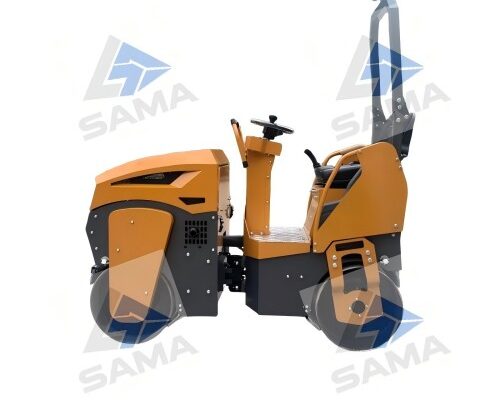
This entry-level machine is ideal for very tight spaces and lighter compaction tasks. A 1 ton vibratory roller typically features a single drum, rear tires, and simple controls. It is well-suited for driveway base preparation, asphalt patching, and soil compaction in confined areas.
For projects requiring higher productivity and operator comfort, a 2 ton ride on roller allows the operator to sit while working. This reduces fatigue during longer shifts and improves visibility over the drum. The ride-on design also typically provides better stability on slopes and uneven ground.
Compact Roller for Driveway
A compact roller for driveway work usually falls in the 1-2 ton range, with features such as a narrow drum width (typically 600-900mm), water spray system for asphalt work, and vibration control for smooth finishes.
Common Applications for a Mini Road Roller
| Application | Why 1-2 Ton is Ideal |
| Residential driveways | Fits through gates, works around house corners |
| Sidewalk construction | Narrow width matches typical walkway dimensions |
| Asphalt patching | Lightweight enough to avoid damaging surrounding surface |
| Parking strip compaction | Maneuvers between parked vehicles |
| Trench backfill | Accesses narrow utility trenches |
| Landscape base prep | Works in gardens and around trees |
| Bike paths and trails | Compacts narrow paved surfaces |
How to Choose the Right 1-2 Ton Roller
For asphalt patching and finishing – A smooth drum vibratory roller with a water spray system prevents hot mix from sticking to the drum. A 1 ton vibratory roller is usually sufficient for thin patching layers under 50mm.
For soil and gravel base – A padfoot drum or a roller with interchangeable drum options provides better penetration on granular materials. The additional weight of a 2 ton ride on roller helps achieve deeper compaction on thicker base layers.
For mixed-use work – A dual-drum (tandem) roller in the 1-2 ton range offers versatility, allowing you to compact both soil and asphalt with the same machine.
For operator comfort on long jobs – Choose a 2 ton ride on roller over a walk-behind model. The seated position reduces fatigue and improves control during extended operation.
Cost-Effectiveness of the 1-2 Ton Class
Small contractors and rental businesses appreciate the 1-2 ton vibratory roller because it offers excellent return on investment. The lower purchase price means you can recoup your investment faster. Reduced transport costs allow you to use a standard vehicle instead of a heavy truck. Lower fuel consumption and simpler maintenance keep operating expenses minimal. Higher utilization rates mean a mini road roller can be used on a wider variety of small jobs compared to large, specialized equipment.
Final Thoughts
For small construction projects, the 1-2 ton vibratory roller is hard to beat. It combines enough compaction power for driveways, sidewalks, patching, and landscaping with the maneuverability to work in tight spaces. Whether you need a 1 ton vibratory roller for light patching, a 2 ton ride on roller for higher productivity, or a general compact roller for driveway work, this weight class delivers professional results at a reasonable cost.
When searching for a 1 ton road roller for sale, look for features that match your specific applications: drum type, water spray system, vibration control, and operator comfort. A well-chosen mini road roller will serve you reliably for years on hundreds of small projects.