
Road Roller vs. Plate Compactor: How to Choose the Right Compaction Equipment
Choosing the right compaction equipment is one of the most important decisions on any construction site. Use the wrong machine, and you may end up with uneven surfaces, poor density, or wasted time and money.
Two of the most common types of compaction equipment are road rollers and plate compactors. While both are designed to compress soil, gravel, and asphalt, they serve very different purposes. This guide will help you understand the key differences and choose the right tool for your next project.
What Is a Road Roller?
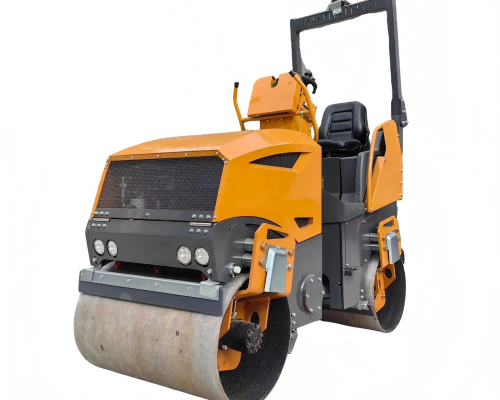
A road roller (also known as a road compactor or road flattener machine) is a heavy construction vehicle used to compact soil, gravel, concrete, or asphalt. These machines typically feature one or more large, heavy steel drums that apply pressure and vibration to the surface, flattening and compacting the material underneath.
A road roller for construction comes in several types: smooth wheel rollers (best for flattening surfaces), padfoot rollers (designed for soil compaction), and pneumatic tire rollers (ideal for asphalt finishing). Powered by diesel engines, road rollers are built to withstand the harsh demands of long-term use.
Key characteristics:
- Heavy weight delivers deep compaction
- Wide drums cover large areas quickly
- Excellent for highways, parking lots, and large foundations
- Less maneuverable in tight spaces
What Is a Plate Compactor?
A plate compactor (also called a vibrating plate) is a smaller, more portable compaction machine. It features a heavy steel base plate that vibrates at high frequency, shaking soil or gravel particles into a tighter, denser layer.
Powered by gasoline or diesel engines, plate compactors are ideal for smaller jobs where larger equipment simply cannot fit. They come in standard (forward-only) and reversible (bi-directional) models, with vibratory plates for handling different soil types.
Key characteristics:
- Lightweight and highly portable
- Excellent for tight spaces and edge work
- Cost-effective for small to medium projects
- May not achieve the same compaction depth as heavy rollers
Road Roller vs. Plate Compactor: Key Differences
| Feature | Road Roller | Plate Compactor |
| Best for | Large areas, deep compaction | Small areas, confined spaces |
| Weight | Heavy (several tons) | Light (under 1 ton typically) |
| Compaction depth | Deep (10–30+ cm per lift) | Shallow (5–15 cm per lift) |
| Coverage per pass | Wide (1.5–2.5 m drum width) | Narrow (40–70 cm plate width) |
| Maneuverability | Limited in tight spaces | Excellent |
| Typical projects | Highways, parking lots, foundations | Driveways, patios, sidewalks, trenches |
| Operator fatigue | Low (seated operation) | Moderate to high (walk-behind) |
| Cost | Higher purchase and operating costs | Lower investment |
When to Use a Plate Compactor
A plate compactor is the right choice when your project is small, the area is confined, or you need precise control around edges and obstacles.
Typical applications for plate compactors include:
- Driveways and patios – Plate compactors are ideal for the fine compaction required in residential paving projects.
- Sidewalk repairs – When working on narrow walkways or around existing structures, a plate compactor offers the precision and control that larger machines cannot provide.
- Trench backfill – After laying utility lines or pipes in a trench, a plate compactor can easily fit into the confined space to compact the backfill material.
- Small parking strips and pathways – For landscape base preparation and small paved areas, a plate compactor is often all you need.
One important note: Plate compactors are generally not recommended for asphalt surfaces, as the vibrating steel plate can cause surface damage. For asphalt finishing, a roller is the better choice.
When to Use a Road Roller
A road roller becomes essential when your project involves large surface areas, thick material lifts, or the need for deep, uniform compaction.
Road rollers excel in:
- Highway and road construction – Road rollers are built to compact large areas efficiently, ensuring uniform density and stability across miles of pavement.
- Parking lots and commercial driveways – For medium to large paved areas, a roller covers ground much faster than a plate compactor, saving significant time and labor.
- Foundation work for large projects – Road rollers are essential in the foundation phase of large construction projects, providing the compacted base for subsequent building phases.
- Asphalt paving – These machines play a key role in road construction by compacting asphalt layers, improving durability and surface smoothness.
Because road rollers typically weigh several tons, they achieve compaction depths that plate compactors cannot match. This makes them the preferred equipment for granular base courses, subgrade preparation, and any application requiring deep material consolidation.
Quick Selection Guide: How to Choose
Still unsure which machine fits your project? Use this simple guide:
| Project Type | Recommended Machine |
| Residential driveway (new) | Plate compactor (for sub-base and asphalt) |
| Residential driveway (repair/patching) | Plate compactor |
| Large commercial parking lot | Road roller |
| Sidewalk or pathway | Plate compactor |
| Highway or main road | Road roller |
| Trench backfill | Plate compactor |
| Landscape base preparation | Plate compactor (small areas) or small roller (larger areas) |
| Asphalt resurfacing (large area) | Road roller |
For many medium to large projects, the best approach is to use both machines: a road roller for deep, high-volume compaction of the sub-base, followed by a plate compactor for edge work, joint touch-ups, and final surface smoothing in confined areas.
Which Is the Best Compactor for Soil?
When selecting the best compactor for soil, the answer depends heavily on soil type and project scale.
| Soil Type | Best Machine | Why |
| Granular soils (sand, gravel) | Vibratory plate compactor or smooth drum roller | These materials respond well to vibration; both machines work effectively |
| Cohesive soils (clay, silt) | Padfoot roller or tamping rammer | Padfoot rollers provide the deep penetration needed for clay compaction |
| Mixed soils | Vibratory roller (smooth drum) | The combination of weight and vibration handles varied conditions |
For most residential and small commercial projects with granular soils, a plate compactor is more than sufficient. But for cohesive soils like clay, particularly on larger sites, a padfoot roller is essential to achieve proper density.
Final Thoughts
Choosing between a road roller and a plate compactor comes down to three key factors: project size, material type, and access constraints.
Choose a plate compactor when: your project is small, the work area is confined, you need precision around edges, or you are working on a tight budget. For driveways, patios, sidewalks, and trench work, a plate compactor is often the perfect tool.
Choose a road roller when: your project involves large surface areas, thick material lifts, or the need for deep, uniform compaction. For highways, parking lots, commercial driveways, and major foundation work, a road roller delivers the efficiency and compaction quality that smaller machines simply cannot match.
The best compactor for soil is the one that matches your specific conditions. By understanding the strengths of each machine, you can make an informed decision that keeps your project on schedule, on budget, and built to last.