
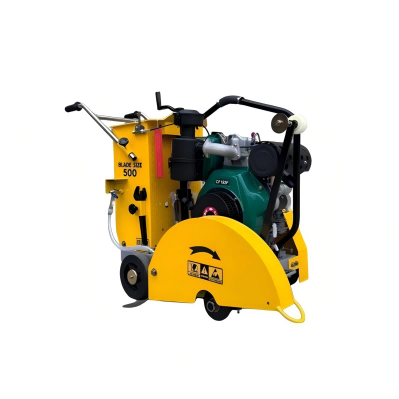
Gasoline vs. Diesel Concrete Cutting Machine: Which Power Source is Better?
Choosing the right power source for your concrete cutting machine is a crucial decision that affects performance, operating costs, and overall project efficiency. Gasoline and diesel are the two most common options, each with distinct advantages. This guide provides a clear comparison of gasoline vs diesel concrete cutter pros and cons to help you determine which engine type is the better investment for your specific needs.
Understanding the Core Differences
While both gasoline and diesel engines are internal combustion engines, they operate differently, which leads to significant differences in performance and maintenance.
- Gasoline Engines: These engines use a spark plug to ignite a mixture of fuel and air. They are known for their lighter weight, lower initial cost, and quieter operation.
- Diesel Engines: These engines use compression ignition; air is compressed to a very high pressure and temperature, and then fuel is injected, igniting spontaneously. This design makes them incredibly robust, fuel-efficient, and powerful.
Gasoline Concrete Cutters: Pros and Cons
When considering a gas concrete cutter, it’s helpful to weigh its specific advantages and disadvantages.
Advantages of Gasoline-Powered Cutters
- Lower Initial Cost: Gasoline-powered machines are generally more affordable to purchase, making them an accessible option for smaller businesses or contractors with limited budgets.
- Portability and Maneuverability: Gasoline engines are typically lighter and more compact than their diesel counterparts. This makes the machines easier to transport and more maneuverable, which is a key advantage in tight spaces or for jobs that require frequent movement.
- Quieter Operation: Gasoline cutters are noticeably quieter than diesel models. This can be a significant benefit on projects in noise-sensitive areas like residential neighborhoods or indoor environments.
- Fuel Availability: Gasoline is widely available at standard fuel stations, making it convenient to refuel on the go.
Disadvantages of Gasoline Cutters
- Higher Fuel Consumption: To produce the same amount of power, gasoline engines consume more fuel. This means more frequent refueling stops and higher fuel costs over the machine’s lifespan.
- Higher Maintenance Needs: Because they have spark plugs and carburetors, gasoline engines typically require more frequent maintenance. This can lead to higher long-term service costs and more downtime.
- Shorter Lifespan: In general, gasoline engines are not as durable as diesel engines for heavy-duty, continuous use and may have a shorter operational life.
- More Emissions: They tend to produce more harmful emissions and heat, making them less environmentally friendly.
Diesel Concrete Cutters: Pros and Cons
For heavy-duty applications, a diesel concrete cutter for heavy duty work is often the preferred choice. Here’s a look at its benefits and drawbacks.
Advantages of Diesel Cutters
- Superior Power and Torque: Diesel engines are known for their high torque at low RPMs, providing the immense power needed for deep cutting and tackling tough materials like reinforced concrete.
- Exceptional Fuel Efficiency: Diesel engines are significantly more fuel-efficient. They use less fuel to produce the same power output, resulting in lower fuel costs per hour of operation.
- Unmatched Durability and Reliability: Built to withstand rigorous conditions, diesel engines are more robust and have a much longer lifespan. Their simpler design (no spark plugs or carburetors) makes them less prone to breakdowns.
- Lower Maintenance Costs: Despite being more expensive to repair when they do break down, diesel engines generally require less frequent routine maintenance, saving time and money over the long term.
Disadvantages of Diesel Cutters
- Higher Initial Investment: The upfront purchase price of a diesel-powered cutter is considerably higher than a gasoline model.
- Heavier Weight: The robust construction of diesel engines makes them heavier, which can reduce portability and make them harder to maneuver in confined spaces.
- Higher Noise Levels: Diesel cutters are typically louder during operation, which may require hearing protection and can be a nuisance in quiet areas.
- Fuel Accessibility: Diesel fuel may not be as readily available at all fuel stations, and it can be more expensive in some regions.
Head-to-Head Comparison
To make the choice clearer, here is a direct comparison of the key factors.
| Feature | Gasoline Concrete Cutter | Diesel Concrete Cutter |
| Power & Torque | Moderate, suitable for lighter tasks | High, ideal for heavy-duty cutting |
| Fuel Efficiency | Lower (consumes more fuel) | Higher (more efficient) |
| Maintenance | More frequent; requires spark plug, carburetor care | Less frequent; more robust design |
| Durability & Lifespan | Shorter; for intermittent use | Longer; for continuous, demanding use |
| Portability | Lighter and easier to transport | Heavier and less portable |
| Noise Level | Quieter | Louder |
| Initial Cost | Lower | Higher |
| Best Application | Small-to-medium projects, DIY, and jobs requiring mobility | Large-scale commercial projects, high-production cutting |
Which Engine Type is Better for Your Concrete Saw?
The answer to the question which engine type is better for concrete saw depends entirely on your specific work profile. Here are some guidelines to help you decide:
Choose a Gasoline Concrete Cutter if:
- Your projects are small to medium in scale.
- You need a lightweight, highly portable machine that is easy to load and move.
- You work in noise-sensitive areas where quieter operation is essential.
- Your budget for initial equipment purchase is limited.
- You only use the machine for a few hours a day or intermittently.
Choose a Diesel Concrete Cutter if:
- Your work involves heavy-duty tasks like cutting thick highway pavements or reinforced concrete.
- You need a machine that can handle continuous, long-hour operation reliably.
- You prioritize long-term fuel efficiency and want to minimize fuel costs.
- You are investing in equipment for the long haul and want maximum durability and lifespan.
- You have a larger upfront budget for a more powerful and robust machine.
Conclusion
Choosing between a gasoline and diesel concrete cutting machine involves balancing your immediate needs with long-term costs. Gasoline cutters offer a lower entry price and better portability, making them a practical choice for smaller jobs and general-purpose use. However, for professionals who need raw power, relentless performance, and cost-effective operation over time, a diesel-powered machine is the superior investment. By weighing the gasoline vs diesel concrete cutter pros and cons against your typical workload, you can confidently select the power source that will keep your projects moving efficiently and profitably.