
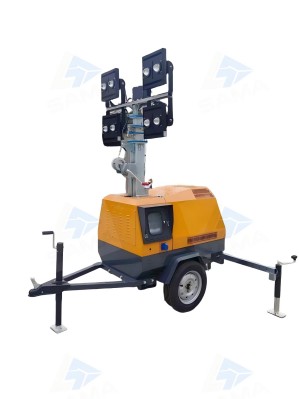
How to Evaluate Mobile Light Tower Performance: Lumens, Lux & Coverage
Whether you are working on road construction, mining, emergency response, or outdoor events, choosing the right mobile light tower is essential for safe and efficient nighttime operations. While many buyers focus on power or lamp wattage, the most important factors are lumens, lux, and coverage area. Understanding these three indicators will help you select the right construction light tower for your project.
1. Lumens: How Much Light Does the Tower Produce?
Lumens (Lm) measure the total amount of visible light emitted by a lighting system. In general, the higher the lumen output, the brighter the mobile lighting system can be.
Typical LED configurations include:
4 × 300W LED: approximately 180,000–220,000 lumens
4 × 350W LED: approximately 220,000–260,000 lumens
4 × 500W LED: over 300,000 lumens
However, high lumens alone do not guarantee better visibility. Light distribution and beam design also affect actual performance.
2. Lux: The Real Measure of Brightness
Lux (lx) measures how much light reaches a specific surface. It represents the actual illumination level that workers experience on site.
For example:
- 200,000 lumens covering 2,000 m² = approximately 100 lux
- The same output covering 4,000 m² = approximately 50 lux
A higher lux value means brighter working conditions. Different applications require different illumination levels:
| Application | Recommended Illuminance |
| General construction | 50–100 lux |
| Road maintenance | 100–150 lux |
| Mining operations | 100–200 lux |
| Emergency rescue | 150–300 lux |
| Outdoor events | 200–500 lux |
When comparing a construction light tower, always check the lux value at the intended working area instead of looking only at lumen output.
3. Coverage Area Matters
Coverage area indicates how much space a mobile light tower can illuminate effectively.
A larger coverage area is not always better. If the same amount of light is spread over a wider area, the brightness decreases.
A well-designed lighting system should provide:
- Uniform light distribution
- Minimal dark spots
- Stable illumination across the work zone
- Adjustable lighting angles
Choosing the right balance between brightness and coverage ensures better safety and productivity.
Why LED Is the Preferred Choice
Modern mobile lighting solutions mainly use LED floodlights instead of traditional metal halide lamps.
- Higher Efficiency
LEDs produce more light while consuming less power, reducing fuel consumption for diesel-powered systems.
- Longer Service Life
LED lamps typically last between 30,000 and 50,000 hours, greatly reducing maintenance costs.
- Instant Start
Unlike metal halide lamps that require several minutes to warm up, LED lights reach full brightness immediately, making them ideal for emergency applications.
- Better Color Visibility
A higher Color Rendering Index (CRI) helps workers distinguish colors more accurately, improving safety during nighttime operations.
What to Consider Before Buying a Portable Light Generator
When evaluating a portable light generator, consider more than just engine power or lamp wattage. Key specifications include:
- Total lumen output
- Average lux at the working area
- Coverage area
- Number of LED lamps
- Lamp power
- Mast height
- 360° lamp rotation
- Operating time
- Fuel efficiency
- CRI and color temperature
These factors determine whether the equipment can meet the lighting requirements of your project.
Choosing the Right Mobile Light Tower
The ideal mobile light tower depends on your application.
For road construction and infrastructure projects, focus on wide coverage with consistent illumination.
For mining and industrial sites, choose higher lux levels to improve visibility and safety.
For emergency response and disaster recovery, a portable light generator with fast deployment, LED lighting, and long operating time offers the greatest advantages.
Conclusion
Selecting a mobile light tower is about more than choosing the highest wattage. A reliable construction light tower should provide the right combination of lumens, lux, and coverage area to deliver safe, efficient, and uniform lighting.
Whether you need mobile lighting for construction, infrastructure maintenance, mining, or emergency operations, understanding these key performance indicators will help you make a more informed purchasing decision and maximize productivity on every job site.